
Conducted and radiated tests from Maxwell's equations perspective
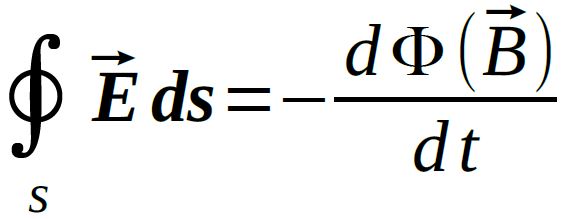
CISPR standards require testing each product from a conducted and radiated fields perspective. CISPR 11 and CISPR 32 require testing the conducted noise from 150KHz up to 30MHz. CISPR 25, addressing automotive products, requires testing the systems up to 108MHz. To complicate the understanding the MIL standards require testing the conducted noise up to 400MHz. Thus the question of what makes a noise conducted or radiated is legitimized. Things can get clarified if the Maxwell’s equations are taken into account to better analyze the effects of the conducted and radiated noise and from where they come from.
DC-DC Converter - SYNC pin from EMC perspective
Among the engineering challenges and trade-offs, beside the technical ones, there is always the system cost. The main design goal is typically to achieve what the marketing department asks for, with the minimal cost. This will enable a cheaper product and would allow a better revenue margin by selling the product in the market. The SYNC pin is a typical feature offered by high current DC-DC converters (typically from 2A and higher) that enables reducing the size of the input capacitance in case multiple DC-DC converters are required. The article will introduce how and why the SYNC feature is used, and which benefit may bring also from the EMC perspective.

CISPR Standards
Introducing an electronic system within the European market is getting challenging from the design perspective. Indeed it is not enough to design a working system, the system must comply with several regulations. In particular what is required for a certain product is defined by the European directives. The European directives are publicly available and can be found online by Euro Lex. The directives are very high level regulations but are a “must to be compliant” with. For an engineer looking for numbers, the directives are not the answer they may search for. Indeed the directives describe general needs that a system may support, but not how to achieve it or test it to make sure that you are compliant. The directives only require the designer to test the product with the “state of the art” knowledge, but do not specify what those are. Once you are compliant with the directives you may apply the CE marching on the product that can be sold in the European market. It is important to highlight that multiple directives generally apply to the same product, thus some time may be needed to understand which ones really apply to the product and which not.

Measuring against a standard
Depending on which market you are developing your system for, you may be affected by one or more regulation and standard. For EMC conducted and radiation tests, the most known standards are the CISPR series released by the CISPR IEC technical committee, and the equivalent EN550xx. Formally, in Europe it should be rephrased the other way around. Indeed the official standards are the EN series and the CISPR are recognized to be equivalent. Said that, those standards are nice and clean, thus you just need to follow it and check if you comply or not with them. Ok, they are neither nice nor clean, but the majority of points do not leave for ambiguities.
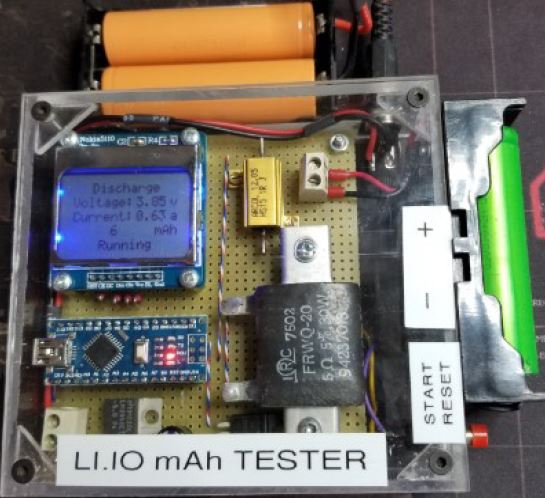
Tester per batterie al Litio
Questo progetto, nasce dalla necessità di scoprire se le batterie che ho recuperato sono effettivamente da buttare oppure no. Infatti le batterie al litio tipo 18650 sono usate nei pacchi batterie, siano essi per trapani o forbici elettriche. Molto spesso nei pacchi di batterie usati se ne trova qualcuna degna di continuare ad essere usata, ma si rende necessaria una misura abbastanza veritiera della sua effettiva capacità.
Autore: Paolo Salvagnini
Registrati al sito
Accedi a tutte le risorse e articoli non visibili pubblicamente, puoi registrarti con pochi passi.
Login
Online
Abbiamo 196 ospiti e nessun utente online