

PCB Layout - understand stray capacitance and inductance
The PCB board layout is the last challenge after having designed the schematic. While things may work on sub-modules level, once all the system gets assembled on the PCB, additional problems may occur. Several “Tips and Tricks Cookbooks” are providing recommendations to the designer making the PCB layout the right way. Nevertheless properly understanding the limitation and boundary conditions at which a certain rule can be used, is fundamental. Thus, in this article, rather than talking about “Tips and Tricks” we will go down to the details of understanding from where the stray capacitance and inductance come from. Indeed, the two are responsible of the major problems a wrong layout may cause at system level.
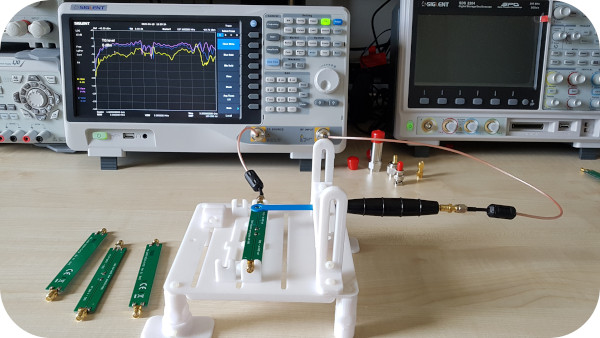
EMC Testing - PCB layout and noise coupling
Engineers do not get surprised by hearing that for precision or RF applications, the PCB must be considered as an electronic component part of the system itself. Each trace routed on the PCB is part of the signal chain and must be carefully designed. This perspective should be actually taken beyond the precision and RF applications, indeed stringent regulations, such as the CISPR standards, apply to any electronic system. CISPR standards cover automotive, industrial and commercial systems and are used by different countries, such as Europe and US, as basis to validate the conformity of a certain electronic system from EMC (Electromagnetic Compatibility) perspective. In this article it will be shown how different trace layouts made on a standard FR4 PCB, may drastically affect the system radiation that may compromise the end product certification, either from conducted or radiated tests perspective. The article will highlights how a PCB should be carefully designed as part of the system, whatever the application would be, to make sure that you achieve the right performances but also you will comply with the EMC standards required for the FCC and CE marking.
Registrati al sito
Accedi a tutte le risorse e articoli non visibili pubblicamente, puoi registrarti con pochi passi.